Tuesday, October 30, 2018

WHAT GOES UP


I met Wen Baragrey online about ten years ago, sharing writing and dreams and life struggles. What has always stood out for me is her wonderful sense of humor, love of family, and talent for storytelling. Her debut novel, WHAT GOES UP, incorporates all that.

Robyn Tinkerbell Goodfellow has a number of difficulties in her young life, starting with her name and her mother’s vocation of hosting fairy parties in their home.

But Robyn’s biggest concern at the moment is a space satellite is falling to earth. Her house has always been a magnet for falling objects like kites, balls, trees, and even a skydiver. She’s sure the satellite will be drawn to them and she will never meet her mysterious father.

The story is filled with marvelous characters and has an ending that brought tears to my eyes.

Published by Random House Children’s Books it is available now. I highly recommend it as a holiday gift for middle grade readers in your life (and even for yourself).

Tuesday, May 22, 2018

ah, Spring

the birdbath turns
murky now that a crow has
washed his dinner


Saturday, October 14, 2017

haiku October

those wraiths of fog rise
from the lake, fingers reaching
for the mountaintops

haiku at dawn looking toward Lake Washington and the Cascade range

Wednesday, August 23, 2017

THUG gets all the stars


The first thing that hit me when I started reading The Hate U Give by Angie Thomas was voice. This book has VOICE, and that is difficult for a lot of writers to achieve.

The second thing that I don’t think anyone can miss unless his or her head is deep in the sand (or elsewhere) is how relevant this story is. I can imagine that some readers will take issue with some of Starr’s choices while others will be cheering her on and shouting, “About time!”

No matter what color your skin or where you stand on politics there is one fact about this story that cannot be denied: It is honest. This is the reality for many people living in America.

Briefly, in case you don’t know, the book begins with a bang when Starr is in a car with a childhood friend who is shot right in front of her by a cop, not because the boy has a gun or is otherwise threatening, but because he turns to ask Starr if she is okay. Starr’s journey through trauma and scary decisions about testifying propel the story on.

The question, as always, is what can we do about racism and inequality? The answer is we must all be like Starr and learn to speak out if society is to ever change. Here is something to cheer about: The Hate U Give has been on the NYT best seller list for something like 24 weeks already and is being made into a movie.

 Angie Thomas deserves the accolades she is receiving and all the stars.

Thursday, July 6, 2017

Orphan Island is a place between here and there

Orphan Island by Laurel Snyder hooked and reeled me in. This middle-grade novel is lyrical, haunting, and unflinchingly honest as it navigates the waters between childhood and puberty.


A mysterious island, which is somewhere between here and there, is home to nine very self-sufficient children who live with no adults and an odd assortment of handed-down rules. These kids have distinct personalities and sometimes grate on one another, but they listen and learn, understanding that their survival depends on working together.

Once a year, a self-propelled, little green boat arrives with a new young one and takes away the oldest. The new child, barely out of babyhood, is soon schooled in how to collect eggs, gut a fish, find fruit, and even read.

Among the mysteries of the island is how and why they have a collection of tattered children’s books, which give them a window about life beyond their island. None of them remembers the time before and has no idea where the oldest one is taken when he or she must leave.

 The protagonist Jinny is torn apart when her best friend, Deen, is taken by the boat, and she is shaken to know she is now the oldest, the one who will go next. Jinny clings to memories of Deen, to their quiet moments and adventures. She has always loved him and this island with its fantastical sunrises and winds that catch a jumping child and set them down again. She doesn’t want to leave the joy and security of her childhood for the unknown.

What she does about it turns the safe and providing island inside out. In the process, Jinny’s eyes are opened to truths about herself.

This book is wondrous and profound. I recommend for all ages.

Here’s a snippet from the moment after Jinny tries to stop Deen from getting in the boat, after he tells her he’s ready to go, wants to find out what’s out there:

As he sped off, Deen turned to look back at her over his shoulder. He called out something. But what? Jinny could see his mouth open and close. He threw a hand sharply into the air, but whatever he said was lost in the spray and mist as they swallowed him.
 Jinny watched the boat disappear. Until all she could see was water and distance. It happened so fast. She found herself standing, reaching out both arms, in the direction the boat had gone. Both hands with outstretched fingers, grasping. As if there was something in the air she might be able to clutch.

Sunday, July 2, 2017

haiku in green

the forest sets to
building its own fence, year to
year, log upon log


green as far as eyes
can see in the forest, layer
upon layer, breathing


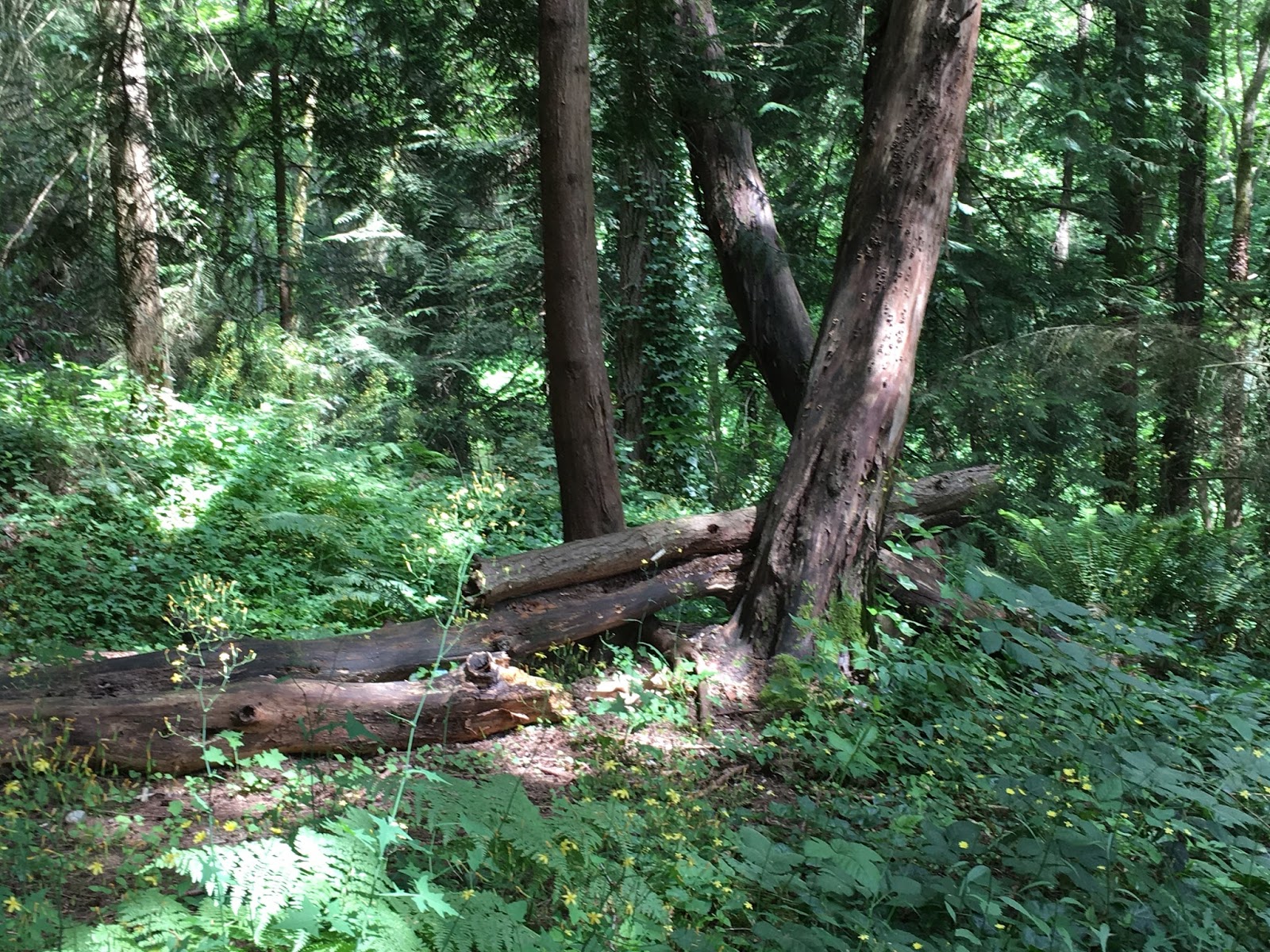
There is a Japanese practice called forest bathing, which is not simply hiking but is a kind of being aware and at peace in nature. I think I've done it naturally for a long time without knowing there was such a practice. I relax in the woods. I inhale with purpose, look up with joy, reach out with wonder.

It is amazing how often I am renewed after a walk in a forest. Some people joke about tree-huggers, but I find a kind of awe and strength around trees. They live long and anchor in earth while reaching for sky and sun.


Thursday, April 27, 2017

Creation myths and story love


It’s been some time since I fell as deeply into a story as I did with N.K. Jemisin’s The Hundred Thousand Kingdoms. Strangely, I say that even though I started reading it on vacation and had to put it aside for a couple of weeks after I got home. But when I picked it up again I fell right back in. That’s how much I retained my love of the characters and storyline.

This adult fantasy is a fresh take on creation myths and gods. I adore the volatile Nahadoth the Nightlord, and the child-like Sieh the Trickster. The “I” telling the tale is Yeine, a girl who at first seems to be a pawn in a deadly struggle but she turns out to be key to something entirely new. And she is badass through and through.

The story opens when Yeine is commanded to come to the city of Sky where her maternal grandfather, who is uncrowned king of the world, names her one of his heirs, much to her shock and the fury of others. She learns quickly that only one of his three heirs will succeed him, but she doesn’t find out what that entails for quite some time.

She is only half-blood of the powerful Arameri people. They are tall and pale. She is short and dark. The Arameri consider her people in Darr to be barbarians and treat her with disdain.

 The truth is Arameri are the most ruthless of all the lands. They are worshippers of the Bright Itempas, the god who created the world with the now-enslaved Nahadoth and now-dead Enefa.
We learn slowly with Yeine as she navigates Sky what the true histories of these gods and mortals are, their secrets and lies, their betrayals and bonds, their despair and hope, their rage and love.

This is the first book (and it was a debut!) in a trilogy. I definitely want to read the rest.

Here, have a few excerpts for voice and style.
 *
There were three gods once.
Only three, I mean. Now there are dozens, perhaps hundreds. They breed like rabbits. But once there were only three, most powerful and glorious of all: the god of day, the god of night, and the goddess of twilight and dawn. Or light and darkness and the shades between. Or order, chaos, and balance. None of that is important because one of them died, the other might as well have, and the last is the only one who matters anymore. 
*
"I cannot hope that your mother taught you duty," Dekarta said to me over this man's back. "She abandoned hers to dally with her sweet-tongued savage. I allowed this--an indulgence I have often regretted. So I will assuage that regret by bringing you back into the fold, Granddaughter. Whether you live or die is irrelevant. You are Arameri, and like all of us, you will serve."
*
Trickster, trickster, stole the sun for a prank. And apparently because it was pretty. The Three had borne many children before their falling-out. Sieh was immeasurably old, another of the Arameri's deadly weapons, and yet I could not bring myself to dash the shy hope I saw in his eyes.
*
It would do no good to run. So I said, "Good evening, Lord Nahadoth." I was proud that my voice did not quaver.
He inclined his head to me, then just stood there smoldering and looking ominous at the foot of my bed. Realizing that a god's sense of time was probably very different from a mortal's, I prompted, "To what do I owe the honor of this visit?"

Friday, April 14, 2017

A gorgeous, windy day for exploration and words

wind whips across the
Sound, carrying deep-water
chill and flinging gulls


brrrrrr. Haiku while walking at low tide along Puget Sound


Monday, February 20, 2017

hints of spring haiku

a gathering of
juncos dethrones a plump robin
from the budding peach tree

pair of woodpeckers--
female and jaunty-capped male
share the suet feeder

Saturday, February 4, 2017

YA for our times

In a time when being an immigrant is politically charged and when some people want to retreat behind walls of fear and hate, I read two excellent YA books that I highly recommend for people who prefer to explore and be open to other cultures. These aren’t happily-ever-after stories. They are bittersweet and do not flinch from spotlighting what makes any of us mistrust the “other”.

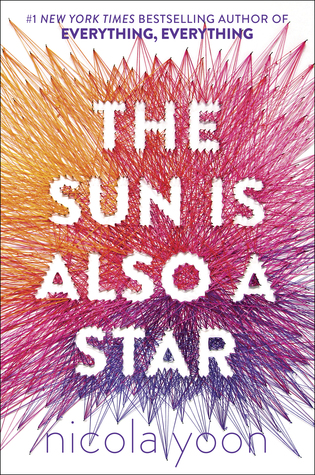
 In THE SUN IS ALSO A STAR, Nicola Yoon (National Book Award finalist) writes the love story of two really smart teenagers who, in the space of a day, discover deep truths about themselves, their families and culture, and the world they exist in.

Natasha is a girl who has faith in numbers, science and facts, probably solidified in reaction to her father. His dream of becoming a famed actor has left her family in poverty. But worse, his DUI leads to the discovery they are illegal immigrants from Jamaica who must leave the US immediately.

Daniel, a poet, is Korean American. His immigrant parents demand the best grades and professions from their sons. He is supposed to be interviewed for Yale when a series of events lead him to Natasha. For him, it’s some kind of sign or destiny.

She has no time for that, but something keeps drawing them closer together. Sure, there’s physical attraction but their budding love has more to do what they discover in the heart and soul of the other. They both know there will be no welcome for them as a couple in their families or communities, even if Natasha somehow finds a way to stop the deportation.

I listened to The Sun is Also a Star on audiobook, so I don’t have a way to quote lines, but I’ve listened to it twice now. That’s how much I love it.


WRITTEN IN THE STARS by Aisha Saeed had me turning pages at all hours as I became more and more terrified for the protagonist, Naila, a Pakistani American.

Even though she is raised in the US and has excelled in school, her parents keep the old ways, strict and unbending. Not only is she not allowed to date, they will choose her husband. But, as things go in both stories and in real life, Naila bends the rules and sets in motion an alarming series of events.

We’ve read news stories about forced marriages and honor killings, but what the author has done is take the reader into the life of a girl suddenly confronted with those horrors, a girl who had no idea this could happen to her.

At the same time, the story finds moments of hope and love.

The copy I purchased has a discussion guide at the end. This makes it an excellent choice for schools and book clubs.

 Of interest, too, is the distinction between forced marriage and arranged marriage. The author states she is happy in her arranged marriage. As well as being an author, she is a lawyer and founding member of the nonprofit We Need Diverse Books.

Wednesday, December 21, 2016

Shortest day, darkest night, moment of hope

Yesterday, the eve of Winter Solstice, my daughter and I went hiking in our favorite neighborhood forest where the air is always sweet with the scent of Douglas fir and Western red cedar. And we stumbled upon this...
The dictionary defines magic as the use of charms or rituals that produce extraordinary results, marvelous effects.
Sometimes magic just sneaks up on you. I don't know who built this labyrinth, but it had a marvelous  effect on me. I've been feeling down in these dark days, and this mystical surprise lifted my spirits and filled me with wonder.
Here are the beautiful stones in its center where my daughter and I both paused to drink in the forest as we took turns walking the labyrinth.
Even my own backyard made magic of the winter solstice when I noticed the sun shining though this metal sculpture of a labyrinth.
Here's to brighter days and moments of hope and magic in our lives. Happy Winter Solstice, everyone.


Friday, December 2, 2016

reflection while walking

after the rainfall,
the pathway littered with leaves
and reflections

haiku while walking in dark times

Tuesday, November 1, 2016

Haiku and other thoughts of the season

October wind sends
leaves whispering, skittering
through the graveyard

There is a beautiful memorial park near my home where I sometimes walk when I  want peace, lots of enormous old trees, and a sea of emerald.

In fall, the palette expands.


Once I slipped into the mausoleum and was stunned by the stained glass everywhere.


Occasionally, melancholy creeps over me in cemeteries, but mostly I feel peaceful--a sense of being connected, in communion, to those who've been, those who are, and those who are still to come.


That seems appropriate on the Day of the Dead.

Friday, September 23, 2016

Echoes of past and present in stunning audiobook


I have never heard a more beautiful audiobook than the Newbery Honor novel ECHO by Pam Muñoz Ryan, author of some 40 books including award-winning Esperanza Rising and The Dreamer.

The story, or actually several entwined stories, is haunting and important to the times we live in as it deals with the fallout of bigotry, injustice, and hatred. The book begins with a fairy tale that introduces a magical harmonica whose destiny is to save someone’s life.

 Over time, the harmonica passes into the hands of Friedrich, a boy in Nazi Germany who yearns to be a composer but is bullied because of a birthmark on his face. The mouth harp gives him solace as his family is torn apart and he is threatened with being put in an asylum.

 The harmonica finds its way from Friedrich to Mike, an orphan living in an institution in eastern U.S. with his younger brother. The instrument brings him comfort and hope that he might save them from an even worse fate.

 Finally, another musical prodigy, Ivy, the daughter of itinerant farmworkers in California, is given the same harmonica. Ivy faces discrimination at school and sees it at the vandalized farm her father is trying to maintain for a Japanese-American family sent to an internment camp. Despite all this, Ivy finds a sense of pride and purpose in her growing musical skill.

 The audiobook brought me to tears more than once as it infuses the children’s heartrending stories with glorious music performed on cello, piano, and, yes, harmonica.

 Music on the recorded version is by Corky Siegel, a blues harmonica and piano player who composes for symphonies and chamber orchestras.

 ECHO is so good I want to read the print version to savor the words on the page, but I also want to listen to the audio again for the sheer delight of Brahms, Bach, Beethoven, Rodgers and Hammerstein, and more. I got the audiobook from the library, but this is one I’d love to own.

Sunday, May 22, 2016

Lake haiku times three

little boat lost,
the lake gives and takes with ebb
and flow, wind and wave

heron, statue still,
waits, stalking, then flies to more
secluded dining

and there were eagles
Today on the lake. Bald
eagle hunts from land and sky.
Fish heads on the shore.


Sunday, March 6, 2016

spring into haiku

glorious death
of camellia blossoms
brightens my path

I love to compose haiku while walking...

Sunday, November 1, 2015

the lake haiku

between November
storms the lake stretches, settles,
breathes in out in out

Saturday, October 31, 2015

Boo!

My carvings this year.


And the things that go bump in the night (or day).
The neighbors...
These people go all out. :)

Even the spiders are in the holiday spirit.
Happy Halloween, everyone!


Monday, October 26, 2015

Small masterpieces: The stories of Kij Johnson


At the Mouth of the River of Bees is an astounding collection of stories. I rarely read short stories, preferring novels, and although I have loved some shorts, I have never read an entire collection that took my legs from under me like this did. Kij Johnson is without doubt a master of this form.

 Even more surprising is how different all the stories are and how each has a resonance felt after the last sentence. She never loses the thread of what the story is truly about. The emotional payoff of The Man Who Bridged the Mist is a thing of beauty. 26 Monkeys is clever, yes, but not a gimmick--it is deeply satisfying. The stories are so powerful I remember each one just looking at the titles.

Warning: one story, Spar, is definitely way too much for children or prudish adults, but if you are neither of those it is a brave piece of writing, going beyond inhibition into pure being/surviving.

Johnson puts her characters in strange, alien, off-kilter places but never loses the core of what it means to be human, to navigate the waters of life.

Disclaimer: I recently took a Clarion workshop with Kij Johnson, which was a day well spent. I had already read most of these stories and formed an opinion of her powerful skill. Meeting her did not change this review, it just made me admire her more. And, for the record, she brought up 26 Monkeys, saying she wrote it disjointed like grief is, a string of momentary details adding up to something bigger.

A writing snippet from Monkeys: No one seems to know how the monkeys vanish or where they go. Sometimes they return holding foreign coins or durian fruit, or wearing pointed Moroccan slippers. Every so often one returns pregnant or leading an unfamiliar monkey by the hand. The number of monkeys is not constant.

From Wolf Trapping: It was after midnight and nearly pitch dark. There was a full moon somewhere overhead, but heavy clouds concealed most of the sky. The wind was stronger, pushing loose snow along the ground in needling waves. There would be no way to follow her tonight. She would have to find her own way home.


For my writing friends here are a few nuggets Kij offered in that workshop:

Her goals--To change how people see something. Make it immersive enough they are carrying it with them, so they lose track of time and reality and the story comes out into the real world with them.

How weird can something be and still be accessible?
Understanding the mechanics of real life fiction is essential to understanding speculative fiction.
In an estranged, alienated experience, we are playing with the fact the readers know what we are writing is not true. We should start out slow, gathering information. She gave an example of Hunger Games--"We don’t start with Panem, we start with being hungry."

She noted that mainstream fiction also gets the need for setting. The first thing the reader is going, 'oh my god where am I and what do I need to do?'

And that needs hyper-precise focus--for instance, the character isn't seeing the whole spaceship but this moment, this room.

She discussed novum--the new thing that changes things. And that isn't one thing that's different but lots of things. "You have to bring something else, something they haven't seen before or a deeper place they haven't been before."

Friday, October 2, 2015

Collaboration super power


Scott Westerfeld, Margo Lanagan, and Deborah Biancotti spoke at my local indie bookstore, Third Place Books, last night, and, well, it left me panting to go to a pub with a couple of writer friends and brainstorm. That’s how their collaborative YA book, ZEROES, was born.

“We met at a pub every week for about four hours,” Westerfeld said. “We drank beer and talked about super powers. As you do.”

Okay, I’m all smiles by now.

I’ve long been a fan of Westerfeld’s imaginative storytelling. When I was first learning how to write a novel (as opposed to nonfiction, which had been my career), I studied his three-part organization of UGLIES, a book I adored for its biting view of societal constructs on physical beauty.

And Lanagan’s lush descriptions and haunting tale swept me away in BRIDES OF ROLLROCK ISLAND. I can still feel that place somewhere deep in my bones.

I’m not familiar with Biancotti’s work, because she’s published mainly in Australia. All three writers are winners of prestigious awards and come from Sydney.

 Biancotti had worked on a television show and fell in love with the writing room model, where writers bounce ideas off each other. “It was so much fun, so much more energizing and invigorating,” she said. “The ideas got crazier and weirder and more awesome.”

 Lanagan, who’s a literary writer of spec fiction and winner of four World Fantasy Awards and two Printz Honor books, said she spends most of her time writing alone, sometimes coming to the end of a draft to find it’s flat. But with this collaboration she said, “You have this sort of instant testing lab. You watch ideas disintegrate…or float rather beautifully.”

 Westerfeld calls collaboration a super power of the human species, and said when the three of them worked together it was like a hive mind. And that resembled somewhat how the characters in the story they were creating worked.


 In ZEROES, six teens have powers that set them apart, and they need each other to survive.

Each of the three authors wrote two of the characters, and they are proud that readers who know their styles couldn’t figure out who wrote what. “We did kind of breakdown each other’s styles,” Lanagan said. “We referred to it as the fourth voice,” Biancotti added.

One of the characters, Anon, is particularly interesting, because no one, not even the other Zeroes, can remember him. Westerfeld described him as the character from the film Momento turned inside out so that instead of the character having short-term memory loss it happens to the people around him.

All the characters were born in 2000, hence being zeroes, and they’re “internetty,” according to Westerfeld.

Will the three authors return to writing alone after they finish the Zeroes trilogy? Well, they all have projects of their own but plan to use skills they’ve learned working together. Biancotti said she’s a lot braver now. “I’m playing dare with myself.”